
Successful Launch of TRISAT-S: Earth Orbit Today, Deep Space Tomorrow
On Saturday, 5 September, shortly after 10:00 p.m. local time (CEST), the Slovenian satellite TRISAT-S was successfully launched into space from the Andøya Spaceport in Norway aboard Spectrum, the launch vehicle developed by German aerospace company Isar Aerospace. The satellite marks another important Slovenian milestone in space technology development. Now orbiting Earth, TRISAT-S has been designed as a precursor to future deep-space exploration missions.
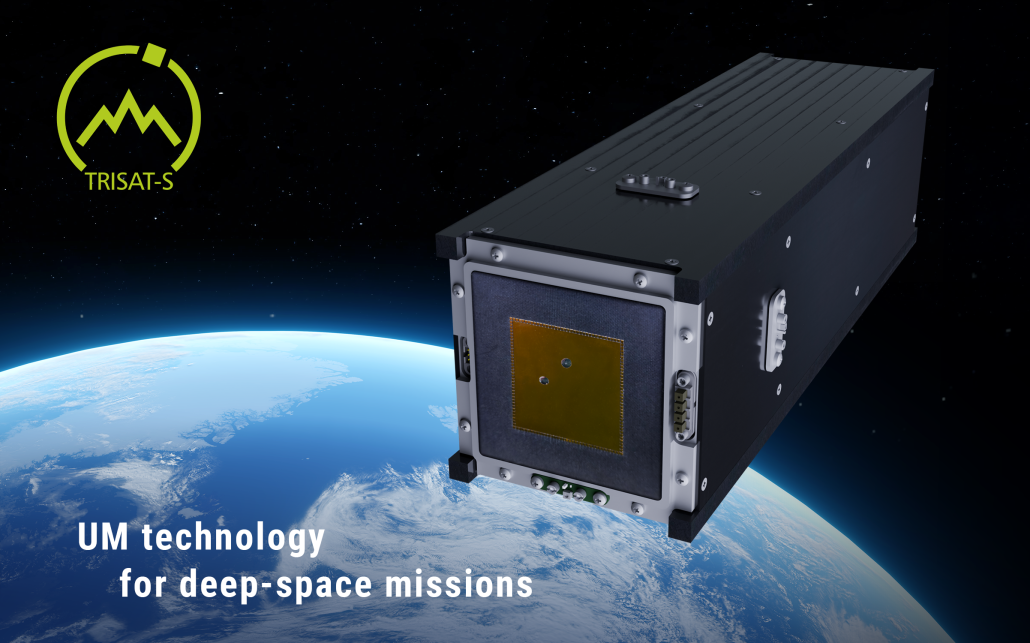
TRISAT-S is an institutional, non-commercial satellite mission led by the University of Maribor in collaboration with the Slovenian space company SkyLabs. Although operating in low Earth orbit, the mission has been specifically conceived to address the challenges of future deep-space exploration.
“With TRISAT-S in Earth orbit, we are deliberately testing technologies intended for future deep-space missions. Today, we are already validating long-term power hibernation, miniature vision systems, and autonomous operations, all key building blocks for reliable spacecraft performance far from Earth. We believe the future of space exploration lies in small, robust, and intelligent systems. Through these demonstrations, we are paving the way for missions that can operate autonomously and efficiently, even in environments where energy is extremely limited,” said Dr. Iztok Kramberger, Head of the TRISAT-S Project.
Over the next five years, TRISAT-S will serve as a long-term technology demonstrator focused on validating the critical capabilities required by small spacecraft operating with highly constrained energy resources. The satellite is equipped with six miniature cameras, a broadband communications system, and an innovative power hibernation concept based on primary batteries, a solution considered essential for missions where solar power is limited or unavailable.
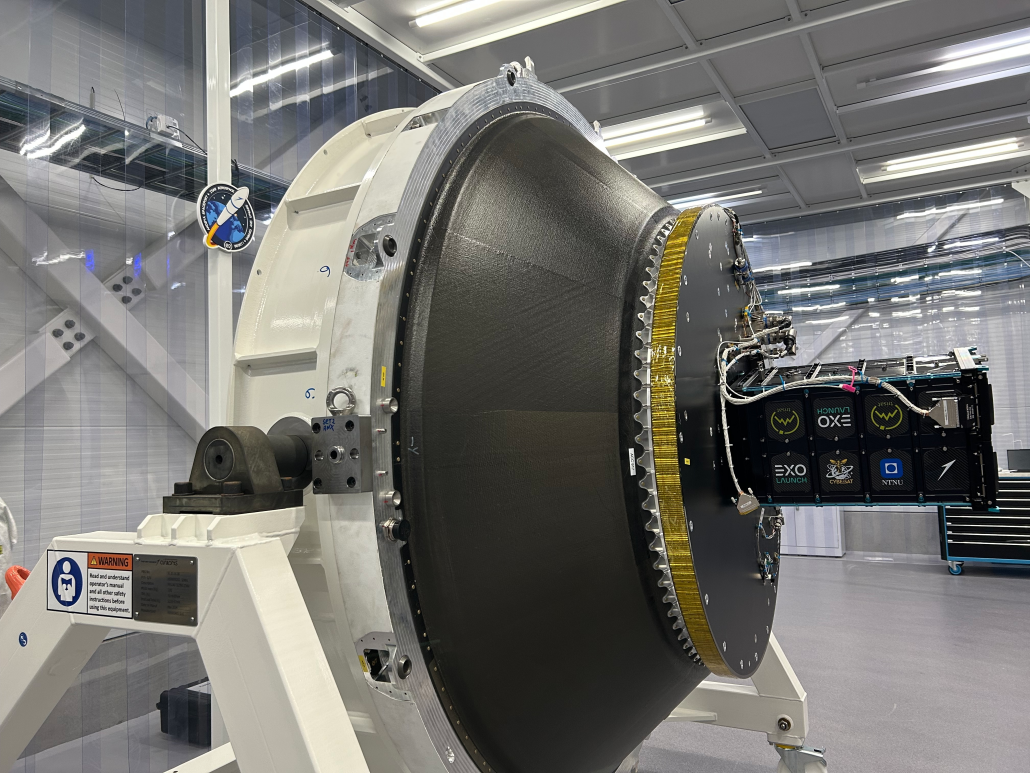
By demonstrating ultra-low power consumption, extended dormant operation, and vision-assisted environmental awareness in orbit, TRISAT-S lays the foundation for future nano-probes capable of autonomous operation far from Earth.
In addition to TRISAT-S, the Spectrum rocket carried several other CubeSats and a non-separable experiment selected through the European Space Agency’s Boost! programme and the German Microlauncher Competition.
Looking far beyond the current mission, the University of Maribor and SkyLabs view TRISAT-S as a stepping stone toward future exploration of the Solar System.
“TRISAT-S is not merely a satellite for today. It is a springboard for tomorrow’s deep-space missions,” Dr. Kramberger emphasized.
A replay of the live broadcast of the Spectrum launch carrying TRISAT-S is available here.
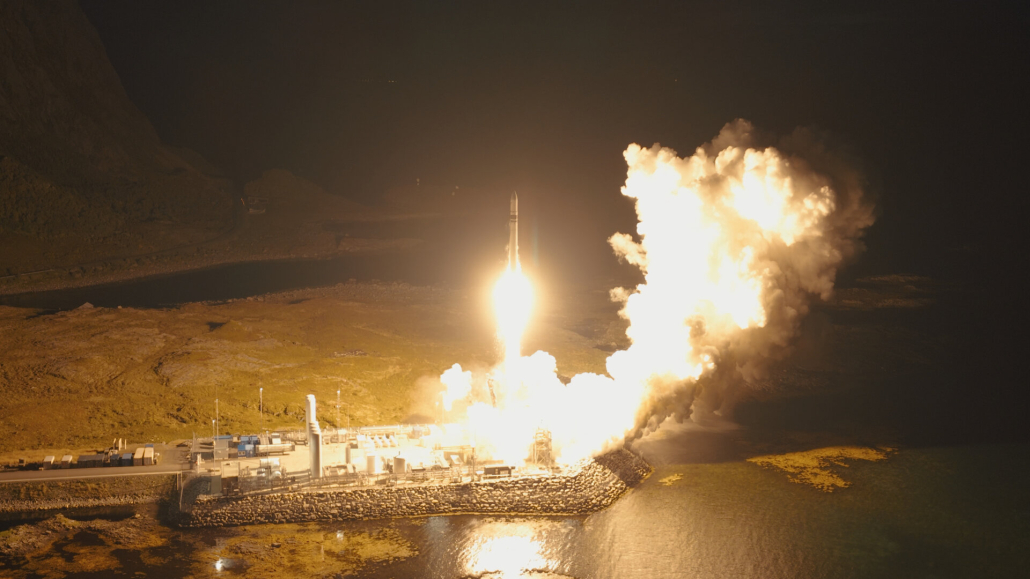
Photo credit: Isar Aerospace