
“When the Sun turns black” as Technology Image of the Week
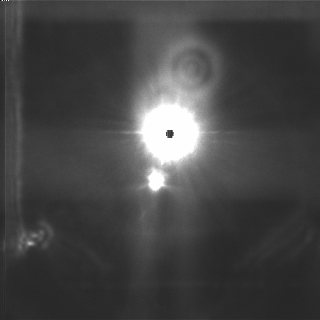
The European Space Agency (ESA) has selected the achievement of TRISAT team as its “Technology Image of the Week” for the third time. This time, the attention of the European space community was captured by an image of the Sun featuring a black dot at its center, resembling a glowing eye in the darkness of space. Captured in LEO by a miniature camera aboard the recently launched TRISAT-S satellite, the image demonstrates the so-called “Black Sun effect” – an optical phenomenon that the team from SkyLabs and University of Maribor is transforming into a valuable visual reference for autonomous space navigation.
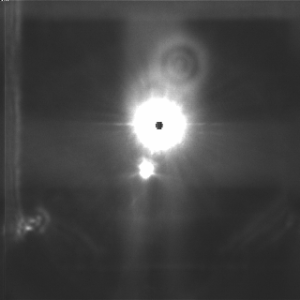
The black dot visible in the image is not a camera malfunction, but rather a characteristic phenomenon that occurs in certain CMOS image sensors under conditions of extreme illumination. The Slovenian team is intentionally exploiting this otherwise undesirable effect as a visual reference for determining the Sun’s position and the satellite’s orientation.
Dr. Iztok Kramberger, Head of the TRISAT Project at the University of Maribor and Chief Innovation Officer at SkyLabs, explains:
“At first glance, the Black Sun effect may appear to be an imaging defect, but for us it represents a key navigation element. Together with observations of the Earth’s and Moon’s geometry, the ‘black Sun’ provides an additional visual reference that allows a spacecraft to independently determine its orientation, position, and movement in space. Our ultimate goal is to give a spacecraft the ability to simply look at its surroundings and accurately know where it is and how it is oriented. This is a decisive step toward fully autonomous navigation far beyond Earth.”
From the Laboratory and CERN to Orbit Aboard TRISAT-S
This latest achievement marks the culmination of several years of technological development. The story began in 2023 with the iconic image “Earth Through a 2-Millimetre Lens” captured by the TRISAT-R nanosatellite in medium Earth orbit at an altitude of 6,000 kilometres. This summer, it continued with the award-winning “Art of Hadrons” image from CERN’s particle accelerator, and today the technology is being validated and further advanced in orbit aboard the TRISAT-S nanosatellite.
The 3U nanosatellite was developed jointly by University of Maribor and SkyLabs. It was launched into low Earth orbit (LEO) on 5 September 2026 aboard the maiden flight of the Spectrum launch vehicle developed by the German company Isar Aerospace. The mission was enabled by the German Aerospace Center (DLR) as part of Germany’s Microlauncher Competition, while Spectrum’s first launch also formed part of broader European efforts to establish commercial space transportation capabilities.
TRISAT-S carries six miniature cameras, providing it with a comprehensive view of its space environment. “While TRISAT-R provided observations from two cameras in medium Earth orbit, TRISAT-S enables the simultaneous collection of data from six cameras in low Earth orbit. This data is invaluable, allowing us to compare real-world observations with ground-based simulations, refine our algorithms, and ultimately close the loop between simulation, laboratory testing, and actual spaceflight,” adds Iztok Kramberger.
SkyLabs’ Key Contribution and Hibernation Technology Demonstration
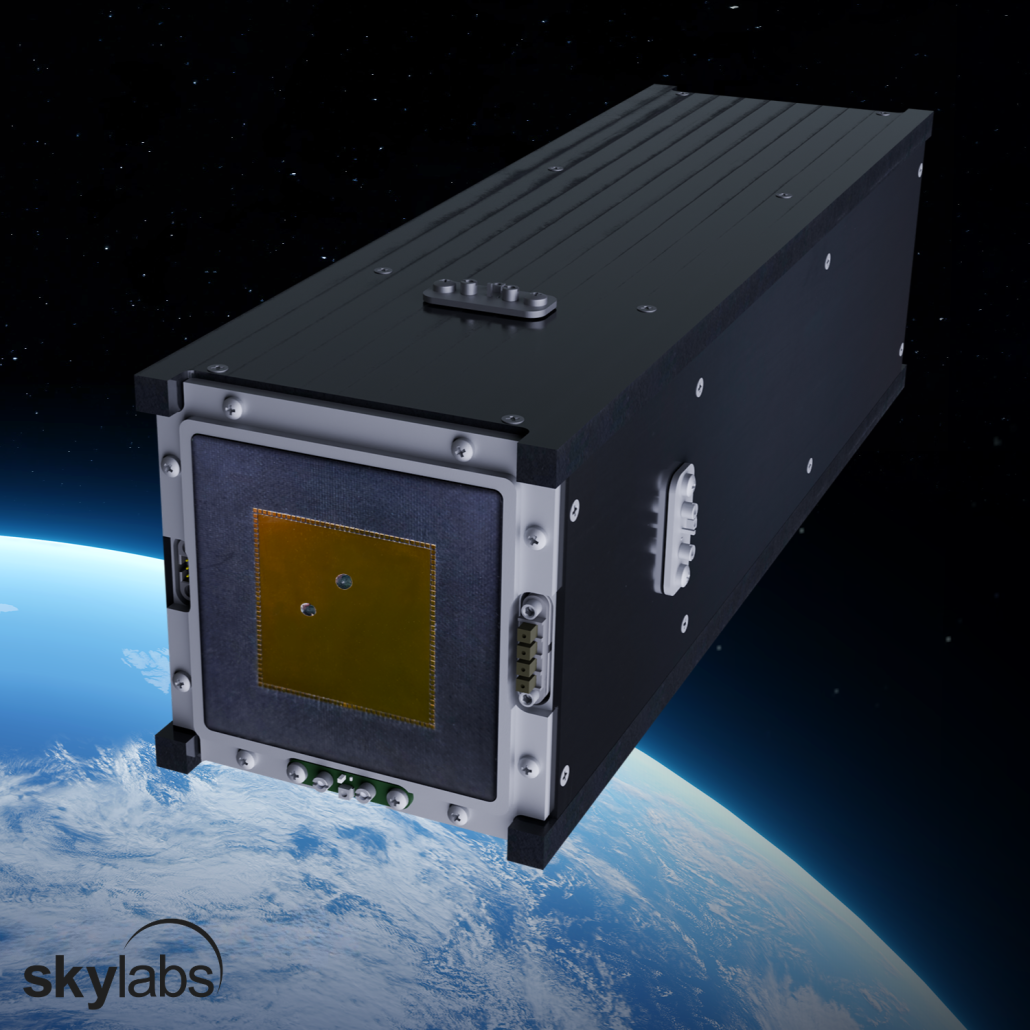
SkyLabs engineers also played a crucial role in the development and operation of the system. The miniature imaging technology is based on SkyLabs’ radiation-protection mechanisms, which were previously implemented on the TRISAT-R satellite. Their performance was further verified during a radiation testing campaign at CERN’s CHARM facility, where the camera operated continuously for more than 108 hours and captured over four million images.
In addition to optical navigation, the team is testing another technology of strategic importance for future missions aboard TRISAT-S: spacecraft hibernation with virtually zero power consumption. This capability is particularly important for TRISAT-S due to its use of a limited primary energy source.
The combination of extremely energy-efficient hibernation and visual sensing of natural celestial bodies addresses two fundamental requirements of long-duration autonomous deep-space missions: efficient management of limited energy resources and the ability to independently orient and navigate without continuous support from Earth.